
Why your team needs an offsite - and how to actually plan one that works.
Remote and hybrid teams don't drift apart because people don't care. They drift apart because trust has nowhere to build. An offsite is how you close that gap - if you plan it the right way. Here's what actually matters, based on how teams who run offsites regularly think about it.
Why bother with an offsite at all?
For a distributed team, day-to-day work happens through screens - calls, messages, shared docs. That's enough to get things done, but it's rarely enough to build real trust. Teams that only ever meet on video tend to know each other's job titles long before they know each other as people.
An offsite closes that gap in a way nothing digital can. It's not a reward or a break from work - it's working time spent differently, in a room instead of a grid of video tiles. Teams that do this well come back with something that's hard to build any other way: a working understanding of who their colleagues actually are.
Five things that separate a good offsite from an expensive week away
Teams that run offsites regularly tend to converge on the same handful of principles - less about the venue, more about how the time gets designed.
Give it a reason that isn't generic
"Team bonding" isn't a purpose - it's a category. The best offsites are built around something specific to that team at that moment: aligning on next year's strategy, working on projects that never fit into the regular calendar, or simply making space for people who've never met in person to actually meet. If the purpose could apply to any company, it's not specific enough yet. Every activity on the schedule should be able to answer "how does this serve the reason we're here?"
Don't over-plan it
The instinct is to fill every hour - a session here, an activity there, back-to-back so nothing feels wasted. In practice, tightly packed schedules leave people exhausted rather than connected. The teams who get this right protect real unstructured time: a slow breakfast, a walk, a free afternoon. That's usually where the actual bonding happens, not in the workshop block.
Over-communicate, and keep it simple
Most people won't read the detailed itinerary until they're already on the trip - so logistics need to be easy to find in the moment, not just sent once in advance. A simple, shared schedule that's easy to check from a phone beats a beautifully designed doc nobody opens. Send it early, send it again, and make sure it's still findable once everyone's actually there.
Plan for who can't make it
Travel conflicts, health, family - there's always someone who can't be there in person, and the FOMO is real. Teams that handle this well don't treat remote inclusion as an afterthought bolted on by the organizers; they build it in from the start, so the people joining remotely still feel part of the moment, not just watching it happen.
Make it your team's version, not a template
The offsites people actually remember rarely look like every other company's offsite. They reflect something true about how that specific team already works and jokes and operates - not a generic package of trust falls and happy hours. The question worth asking isn't "what do other companies do at offsites," but "what already makes our team ours - and how do we bring that into the room?"
A good offsite purpose should feel like it belongs to your team specifically - not something that could be copy-pasted onto any other company's calendar. The core idea behind principle #1
The ratio that actually matters: 20 / 30 / 50
One of the more useful frameworks for pacing an offsite comes from Doist's retreat playbook: roughly 20% structured work, 30% planned activities, and 50% genuinely free time. It's a bigger free-time allocation than most people expect - and that's the point.
Focused sessions on the thing that actually needs the room - strategy, alignment, projects that don't fit the regular calendar.
Shared experiences that give the team something to do together - planned, but not mandatory in tone.
Unstructured space - meals, walks, downtime. This is where most of the actual trust-building happens, not in the agenda.
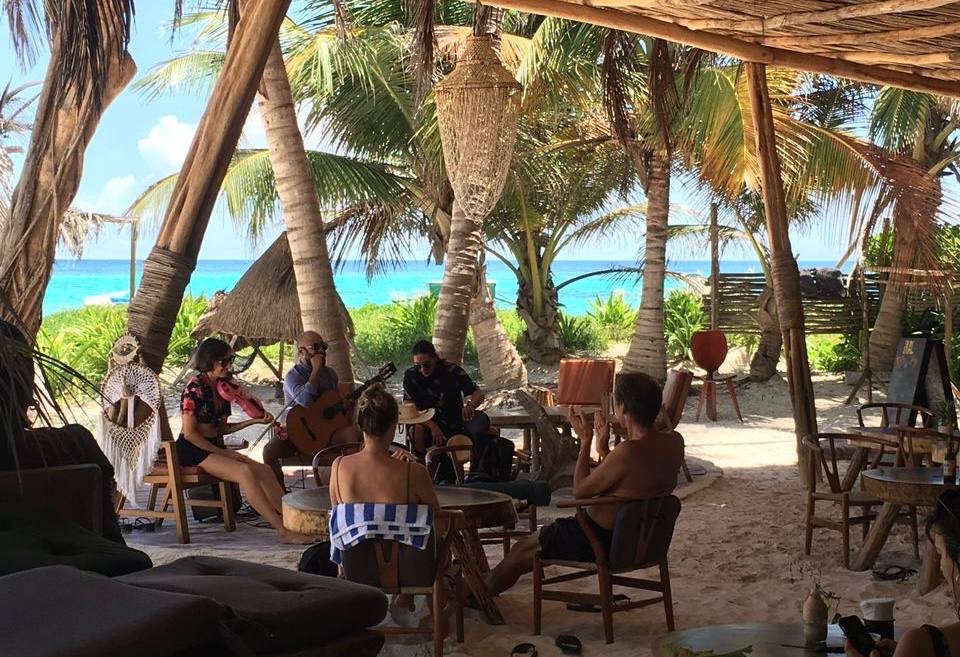
Even the working sessions are hard to fully script months out - the real topic a company needs to work through usually only becomes clear as the offsite gets closer. That's a reason to plan the work agenda late and loosely, and invest early in the part that doesn't change: comfortable, communal space where people can gather, relax, and fall into the kind of unplanned conversation that a packed schedule leaves no room for.
The part most teams get stuck on
None of this is complicated in theory. It gets hard in practice - because the principles above are the fun 20%, and the other 80% is venues, flights, transfers, catering, timelines, and a dozen vendors who've never worked together before. That's usually where "let's do an offsite" quietly turns into "let's do an offsite next year instead."
You bring the purpose. We'll handle the other 80%.
Flockin designs, books and runs the logistics for company offsites across Europe - venue, food, facilitation and adventure, in one fixed price. Start from a proven scenario, or use it as a starting point we tailor to your team.
Further reading on offsite planning: Brittany Jezouit's reflections on running Medium's company-wide offsites, published on Medium.